Small House Interior Decoration Ideas | Tips for Small Spaces
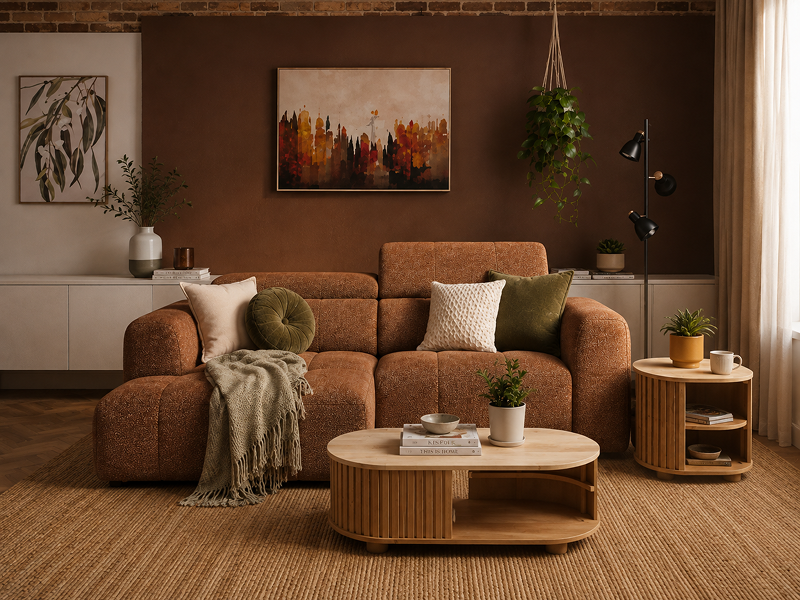
Small spaces have a way of making you think the solution is more room, but here's the thing: the problem is rarely the size of the space. More often, it is the furniture choices, the layout or accumulated clutter that makes it feel like the walls are closing in.
Interior decoration for small houses is really about working with what you've got. That means choosing furniture that pulls double duty, keeping things light and uncluttered and making sure every corner of your home has a purpose. With the right approach, even the most compact home can feel open, calm and genuinely comfortable.
This guide covers 12 of the best interior decoration ideas for small houses, room by room, so you can stop making do and start making it work.
Key takeaways
- Light colours and strategic mirrors can make any small room feel significantly larger.
- Multifunctional furniture is the single most effective investment in a small home.
- Smart storage solutions help eliminate clutter, which is the fastest way to make a space feel cramped.
- A cohesive colour palette and consistent flooring create visual flow across open-plan layouts.
- Room-by-room thinking helps you solve specific space challenges rather than applying generic fixes.
12 interior decor ideas for small spaces
Small spaces call for smart thinking. Whether you're working with a compact apartment, a modest house or a single room that needs to do a lot, the right decorating choices can transform how a space looks and feels. These twelve ideas will help you make the most of every square metre, without compromising on style.


1. Use light colours to open up space
Pale walls, ceilings and floors reflect natural light, making rooms feel airier and more spacious. Whites, warm creams, soft greys and sandy neutrals are all reliable choices for smaller interiors. If you want personality, bring in colour through cushions, artwork and accessories, which are easier to change and keep your base palette flexible for years to come.
2. Keep your colour palette simple
Visual clutter makes a room feel smaller just as quickly as physical clutter does. When every surface is a different colour or finish, the eye doesn't know where to settle, and the room feels busy.
Stick to two or three tones across your furniture, walls and soft furnishings, and keep your wood tones consistent throughout. The result is a sense of calm and flow that makes a small home feel considered rather than chaotic.
3. Always choose multifunctional furniture
In a small home, every piece of furniture needs to earn its floor space. A sofa with storage underneath, a bed with built-in drawers or a coffee table with a lift-top surface are all examples of furniture doing double duty. These pieces solve real, everyday problems without adding bulk to the room.
4. Make the most of vertical space
When the floor plan is limited, go up. Tall floating shelves draw the eye upward, making ceilings feel higher while giving you valuable storage for books, plants and everyday items. Floor-to-ceiling shelving in a living room or bedroom can replace several freestanding pieces at once, keeping the floor clear and the room feeling far less cluttered.
5. Open up the space with mirrors
A well-placed mirror is one of the most powerful interior decor ideas for small spaces. Mirrors bounce light around a room, creating the illusion of depth and making even a narrow hallway or compact bedroom feel larger. Lean a full-length mirror against a wall or hang a large framed piece opposite a window to make the most of the effect.
6. Let natural light in
Make the most of every bit of natural light you have. Swap heavy curtains for sheer linen panels, keep windows clear of furniture and use reflective surfaces like glass, gloss and metal to help light travel further into the room.
In darker spaces, layer your artificial lighting across ambient, task and accent sources so the room stays warm and inviting after the sun goes down.
7. Choose compact, right-sized furniture
Oversized furniture is one of the most common small-space decorating mistakes, and one of the easiest to avoid. A sofa that is too deep, a dining table that seats eight or a bed frame with chunky sides can quickly overwhelm a room.
Look for pieces with slimmer profiles, raised legs (which allow light to pass underneath and make floors feel larger) and proportions that actually suit the size of your space.
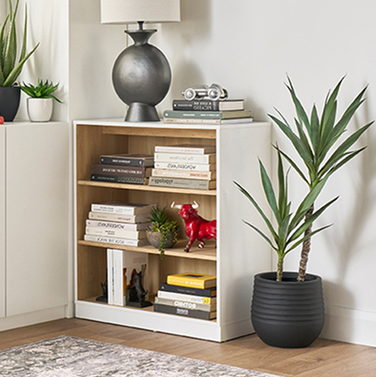
8. Use smart storage solutions
Clutter is the enemy of a small home. Invest in storage furniture that keeps everyday items out of sight, such as ottomans with lids, side tables with shelves, and bookcases with closed lower cabinets.
In rooms without built-ins, freestanding storage units give you flexibility without committing to permanent fixtures, which is especially useful if you're renting.
6. Let natural light in
Make the most of every bit of natural light you have. Swap heavy curtains for sheer linen panels, keep windows clear of furniture and use reflective surfaces like glass, gloss and metal to help light travel further into the room.
In darker spaces, layer your artificial lighting across ambient, task and accent sources so the room stays warm and inviting after the sun goes down.
7. Choose compact, right-sized furniture
Oversized furniture is one of the most common small-space decorating mistakes, and one of the easiest to avoid. A sofa that is too deep, a dining table that seats eight or a bed frame with chunky sides can quickly overwhelm a room.
Look for pieces with slimmer profiles, raised legs (which allow light to pass underneath and make floors feel larger) and proportions that actually suit the size of your space.
8. Use smart storage solutions
Clutter is the enemy of a small home. Invest in storage furniture that keeps everyday items out of sight, such as ottomans with lids, side tables with shelves, and bookcases with closed lower cabinets.
In rooms without built-ins, freestanding storage units give you flexibility without committing to permanent fixtures, which is especially useful if you're renting.


9. Define spaces in open-plan layouts
Open-plan living is common in Australian apartments and smaller houses, but without clear zones, the space can feel a bit shapeless. Use furniture arrangement to create boundaries. A sofa facing away from the dining area immediately signals where one zone ends and the other begins.
Pair this with rugs beneath each seating group to visually anchor them, and the room feels structured and intentional without a single extra wall.
10. Use rugs to anchor areas
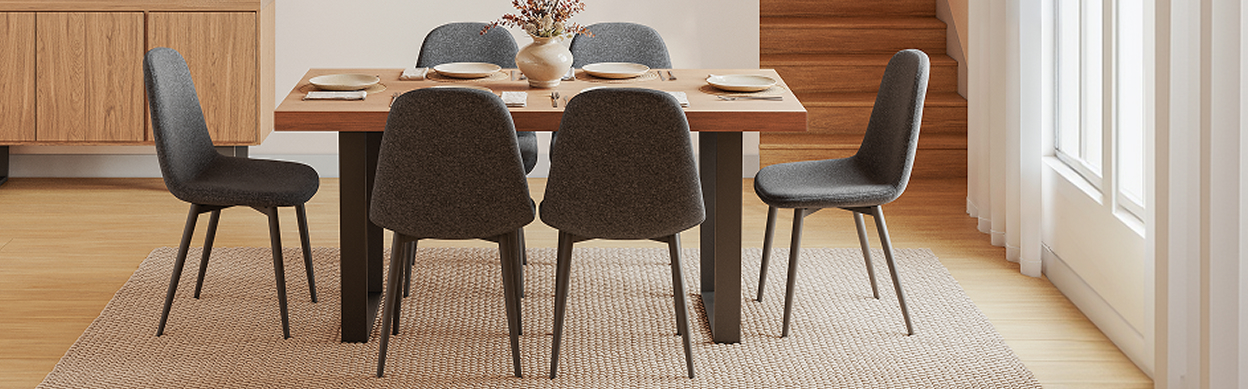
Speaking of rugs, they're great for defining the footprint of a seating or dining area and bring a sense of order to open spaces. In small rooms, choose a rug large enough for all the front legs of your furniture to sit on. Rugs that are too small float in the middle of the room and actually make the space feel smaller.
In open-plan layouts, use two separate rugs in similar tones to create distinct zones without visual conflict.
11. Keep decor minimal but impactful
In a small home, less is almost always more when it comes to accessories. Rather than spreading decor across every surface, choose a few considered pieces – a sculptural vase, a framed print, a trailing plant – and give them room to breathe. Grouping smaller items into odd-numbered clusters creates impact without becoming visual noise.
12. Use lighting to enhance space
Overhead lighting alone tends to flatten a small room. Layer it with floor lamps, table lamps and wall sconces to create warmth and depth throughout the space.
Placing a lamp in a corner draws the eye there and makes the room feel wider, while uplighting directs attention toward the ceiling and adds a sense of height. Dimmer switches are a simple addition that give you real flexibility across different times of day.
Small house decoration ideas for each room
Every room in a small home comes with its own set of challenges. Solving them one space at a time is less daunting and more intentional.
Interior decoration ideas for a small living room

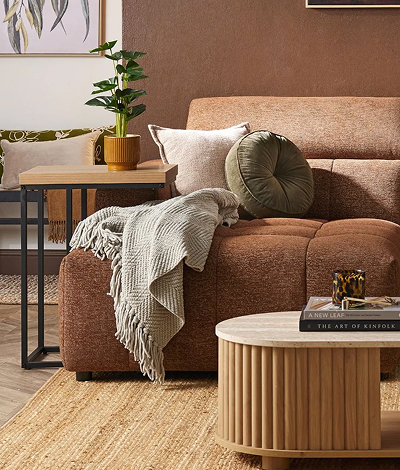

The living room is usually where small-space tension is felt most. The goal is a layout that feels comfortable without being crowded, and it starts with your sofa.
Choose one that suits the dimensions of your room. A two-seater or compact three-seater often works better than a corner suite in a tight space. Float furniture slightly away from the walls to create breathing room and avoid blocking natural light with tall pieces near windows.
For more advice on arranging a compact lounge, see our 15 simple styling ideas to transform your living room.
Interior decoration for a small bedroom
Bedroom clutter can make a small room feel half its actual size, so the fewer pieces on the floor, the better.
A bed with under-bed storage drawers does the job of a chest of drawers without eating up any extra floor space. Wall-mounted bedside shelves or floating bedside tables are another easy win.
And when it comes to colour, keep things soft and restful. Bold feature walls tend to close a small room in rather than make it feel cosy.
For more ideas on maximising a compact bedroom, check out our small bedroom ideas and browse our bedroom furniture.
Interior decoration for a small kitchen
In a small kitchen, benchtop clutter is the enemy. A compact pantry unit keeps everyday items off the bench and neatly contained, while open shelving lets you store frequently used pieces without the room feeling boxed in.
A bar cart or slim sideboard nearby can also pull double duty, giving you extra storage that doesn't require any installation.
Keep the colour palette across your furniture and decor light and consistent, and choose simple, handle-free styling where you can for a cleaner finish.
Interior decoration for a small hall
Your hallway sets the tone for the whole home, so it's worth getting right, even if it's on the smaller side.
A slim hall table gives you somewhere to land keys, sunglasses and everyday bits without blocking the path. A mirror above it does a lot of heavy lifting, bouncing light toward the front door and making the space feel longer than it actually is. Floor-level clutter in a hallway makes even a generous one feel like a squeeze. Wall hooks or a narrow coat rack are also a great call, keeping the floor completely clear.
Tips on how to make a small house look bigger
Beyond the room-by-room tips above, a few broader principles apply across the whole home. These are the habits and choices that quietly make everything feel more spacious.
- Keep furniture low-profile: Pieces with a lower visual height, like platform beds, low-slung sofas and low coffee tables, allow more of the wall to be visible above them, which makes ceilings feel taller, and rooms feel less hemmed in.
- Use consistent flooring throughout: Where possible, running the same flooring material from room to room eliminates the visual breaks that make a small home feel chopped up. This is especially effective in open-plan areas and wherever a living room connects to a kitchen or dining space.
- Choose furniture with legs: Pieces that sit on raised legs rather than flush to the floor allow light and sightlines to pass underneath. It is a simple detail that creates a genuine illusion of more floor space.
- Edit regularly: Clutter accumulates gradually, making it easy to miss until it gets out of hand. Every few months, take a look at what is sitting on surfaces, what has crept into corners and what is being stored in plain sight.
Common small space decorating mistakes
Even with good intentions, small-space decorating is easy to get wrong. Here's what to avoid:
- Overcrowding furniture: More furniture doesn't mean more function. It means less space to move. Choose fewer, better pieces.
- Using dark colours on every surface: Deep tones can work beautifully in small rooms as an accent, but used across walls, floors and furniture simultaneously, they absorb light and close the space in.
- Relying on overhead lighting: A single downlight or pendant in the middle of the ceiling leaves the corners in shadow, making rooms feel smaller than they are.
- Ignoring storage until after decorating: Storage needs to be part of the initial plan, not an afterthought. Once furniture is chosen and placed, retrofitting storage solutions is much harder.
- Buying furniture before measuring: It sounds obvious, but it's the most common small-space mistake. Always measure your space and the pieces you're considering before purchasing, and account for clearance around doors, walkways and drawers.
Make the most of every room with Fantastic Furniture
A small home that functions well is not about having less – it's about choosing smarter. The spaces that feel best are the ones where every piece has been considered, storage is sorted and the room genuinely serves the people living in it. Get those foundations right, and the styling takes care of itself.
Ready to get started? Explore Fantastic Furniture's range of sofas, storage furniture, rugs and decor to find pieces designed for everyday Australian living in homes of every size.
FAQs
How do you decorate a small house?
Start with function before aesthetics. Plan your storage, choose furniture scaled to your space, then layer in colour and lighting. Light tones and mirrors help rooms feel larger, and a cohesive palette ties the whole home together.
What colours make a small house look bigger?
Whites, warm neutrals, soft greys and pale earthy tones. They reflect light and keep the eye moving freely. If you want deeper colours, use them in soft furnishings and accessories rather than on walls.
What furniture is best for small spaces?
Multifunctional pieces such as storage beds, extendable dining tables and ottomans that double as coffee tables. Look for slim profiles, raised legs and proportions designed for compact rooms.
How can I maximise space in a small home?
Use vertical shelving, invest in built-in storage, keep surfaces clear and use mirrors to add depth. Define zones with rugs in open-plan areas, and edit your belongings regularly – clutter is the fastest way to make a small home feel smaller.
What are the best interior decoration ideas for small flats?
The principles of interior decoration for small flats are much the same as any compact home (multifunctional furniture, light colours and smart storage), but zoning is especially important. Use rugs and furniture placement to carve out distinct living, dining and sleeping areas without relying on walls.