Should You Rotate or Flip Your Mattress? | Mattress Care Guide
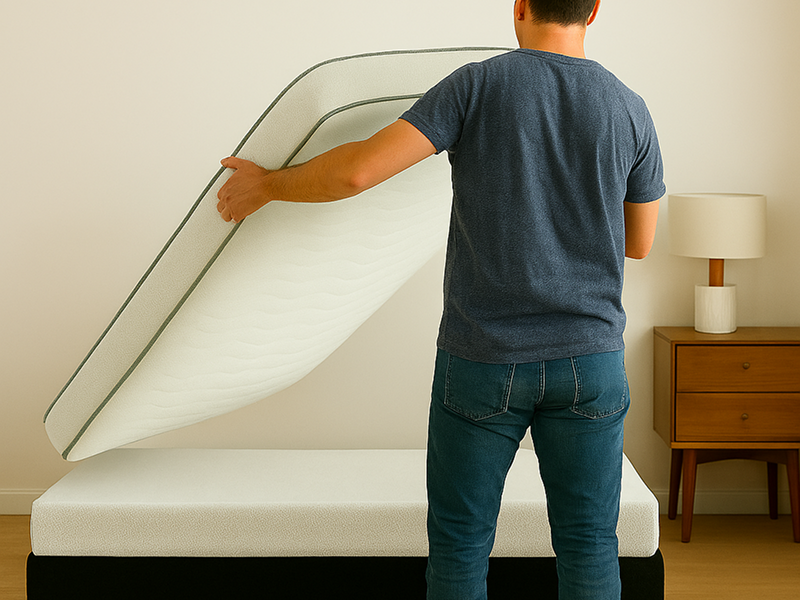
You wash your sheets, flip your pillows and vacuum your bedroom floor often. But how often should you rotate your mattress?
It's one of those tasks that's easy to overlook until you wake up sore, notice a suspicious dip on your side or realise your mattress feels different to when you first bought it!
Luckily, with a few simple habits, you can help prolong your mattress's lifespan and improve your sleep. This guide covers everything you need to know, from the best mattress rotation schedule for your bed to essential mattress maintenance tips.
Key takeaways
- Rotating your mattress head-to-foot helps prevent uneven wear and sagging.
- Most mattresses should be rotated every 3–6 months.
- New mattresses can benefit from monthly rotation during the first few months.
- Many modern mattresses, including memory foam, latex and hybrid, are not designed to be flipped.
- Some mattresses with zoned comfort systems should not be rotated either, so always check the manufacturer's care guide.
- Always follow the manufacturer's care instructions for your specific mattress type.
What's the difference between rotating and flipping your mattress?
We all want our mattresses to stay as comfortable as the day we bought them, but keeping them in top shape means knowing the difference between a rotation and a flip. While these terms are often used interchangeably, mixing them up can actually damage your bed.
- Rotating: Turning your mattress 180 degrees so the head becomes the foot. The top stays the top. This works for almost all modern beds.
- Flipping: Turning your mattress over completely so the underside becomes the new top. Most modern mattresses are not designed for this.
Whether you should rotate or flip depends entirely on your mattress type, which we'll dive into next.
Why does rotating your mattress matter?
Most of us sleep in the same spot on our bed every night. Over time, constant pressure causes the foam or coils to compress unevenly. This creates soft spots and dips, particularly where your hips and shoulders rest.
How often to rotate a mattress depends on how quickly these marks form, as redistributing that pressure can add another year of supportive life to your bed.
If you share a bed, this is even more important. Couples often create a "centre sag" over time, which eventually makes you roll into each other. Knowing how often you should rotate your mattress prevents that dip from forming.
Should you flip your mattress?
Flipping your mattress every six months used to be the golden rule. Older innersprings were identical on the top and bottom, so flipping them was the best way to stop the springs from wearing out in the same spots.
These days, most beds use a specific "right side up" design. They feature a dense support core at the base and a soft comfort layer on top to handle the contouring. This setup only works when the correct side faces up. Flip it, and you're sleeping directly on the firm support core, which offers zero cushioning for your pressure points. This also strains the internal structure in ways it wasn't designed to handle, causing the mattress to wear out faster.
Unless your mattress is explicitly labelled as double-sided, rotating (not flipping) is the right move.
How often should you turn your mattress?
Your mattress rotation schedule should depend on its age and material. Here's a quick breakdown of how often to turn a mattress:
| Mattress Type / Stage | How Often to Rotate |
| New mattress (first 3–6 months) | Once a month |
| Memory foam | Every 3 months |
| Innerspring (newer) | Every 6 months (1–2 times per year) |
| Innerspring (older) | Every 2–3 months (2–5 times per year) |
| Latex and pillow-top | Every 6 months |
| Hybrid | Every 3–6 months |
| Lightly used mattresses (e.g., guest beds) | Every 6–12 months |
New mattresses also benefit from extra attention while the materials settle and adapt to your body. Starting a rotation routine from day one prevents permanent dips from forming too quickly.
If you love that soft, sink-in feeling, check out our guide to plush mattresses to see if one is right for you!
A handy trick: tie your rotation to the change of seasons. Spring, summer, autumn, winter — rotate your mattress once a season to help keep track of when you last did it.
Should you rotate a memory foam mattress?
Memory foam deserves a special shout-out. Because it moulds so closely to your body, memory foam can develop deep impressions faster than other materials. Rotating a memory foam mattress every three months rather than six keeps that "cloud-like" feel going much longer.
Can you rotate too much?
Generally, no. Rotating more often than recommended won't harm your mattress and can actually help distribute wear even more evenly. However, there is one important exception to keep in mind.
- Zoned mattresses: Some mattresses feature specific "zoned" support for your lumbar spine. Rotating these can put the wrong support in the wrong place, so check your manual first.
- The general rule: For most other beds, rotating more often than recommended won't hurt.
- When in doubt: Refer to your manufacturer's guidelines, as they know their specific materials best.
Which mattresses shouldn't be flipped?
Most modern beds are one-sided. Flipping them can damage the layers and ruin your sleep.
- Memory foam: These use a "right side up" design, so flipping means losing that signature contouring and sleeping on a hard base. Stick to a three-month rotation to keep them in top shape.
- Pillow-top: Because the plush padding is permanently sewn to the top, flipping the mattress makes it unusable. Rotate these every six months instead.
- Hybrid: These mix soft foam layers with a sturdy coil core, not built for direct pressure. To keep the layers balanced, rotate your hybrid every three to six months.
- Latex: Most modern versions are single-sided despite their natural resilience. Check your care guide first, but rotating every six months is a great habit.
Which mattresses should be flipped?
Only two types of beds benefit from a full flip:
- Traditional innerspring: Older styles without a topper are identical on both sides. Flip these every 6 months to keep the springs from wearing unevenly.
- Double-sided: These premium beds offer two sleeping surfaces. They are specifically designed to be flipped, but always check your manual to be sure.
How to tell if your mattress needs rotating
While sticking to a schedule is great, your bed often gives you physical cues when it needs attention.
If you notice any of the following, your mattress may be due for a turn:
- Visible dips: Look for soft spots or hollows where you or your partner usually sleeps.
- Uneven firmness: Notice if one end of the bed feels significantly softer or firmer than the other.
- The "centre sag": Pay attention if you and your partner find yourselves rolling toward the middle of the bed.
- Morning aches: Waking up with stiffness in your hips or lower back? This often means your support has become uneven.
Step-by-step guide on how to safely rotate a mattress
Rotating a mattress isn't too complicated, but having a hand (or two) makes it a lot easier. Here's how to do it safely:
- Strip the bed: Remove all pillows, bedding and your mattress protector before you start.
- Clear the area: Give yourself room to move. Push bedside tables out of the way if you need to.
- Grab a helper: Mattresses are heavier than they look. Having someone on the other end makes the whole job much easier and reduces the risk of dropping or bending it — especially if your mattress is on the larger size.
- Rotate head-to-foot: Lift the mattress from both ends and turn it 180 degrees on the base. The head end should now be at the foot of the bed frame.
- Re-centre it on the base: Make sure the mattress is sitting evenly on the slats or base before you put weight on it.
- Remake the bed: Replace your mattress protector and bedding, and you're done.
More ways to extend your mattress's lifespan
While rotating is your best defence against wear, these mattress maintenance tips will help your bed last even longer:
- Use a protector: A quality mattress protector shields your bed from spills, sweat and allergens.
- Vacuum occasionally: A light vacuum every few months removes dust. Sprinkle some bicarb soda first to help absorb odours.
- Check your base: Ensure your bed frame or base is sturdy. The slats should be no more than 7cm apart to prevent sagging.
- Be mindful of use: Avoid jumping on the bed or sitting on the same edge repeatedly to protect the internal structure.
Even with the best care, most beds eventually need to be replaced. If yours is reaching the 7-year mark, check out our guide on how often you should replace your mattress to see if it's time for an upgrade.
If you are ready for a fresh start, our blog on how to choose the perfect mattress will help you find the right fit for your sleep style.
Ready for a better night's sleep?
Rotating your mattress is one of the simplest ways to protect your investment and wake up feeling fresh. By making it a seasonal habit, your mattress will perform its best for longer, and your body will definitely thank you.
If it's time for an upgrade, explore our range of mattresses, beds and bedding for a better sleep night after night.
FAQs
How often should you rotate your mattress?
It depends on the type. Rotate memory foam every three months, as it develops body impressions more quickly. Latex, pillow-top, and modern innersprings are fine every six months, while older innersprings benefit from two to five rotations per year. When in doubt, rotate with the seasons.
Can you rotate a mattress too much?
Generally, no. Rotating more often than recommended helps distribute wear even more evenly. The only exception is "zoned" mattresses designed for specific body alignment.
Do memory foam mattresses need to be flipped?
No. Memory foam is one-sided, with comfort layers on top and a support base underneath. Flipping it removes that cushioning and can damage the internal structure, so stick to a head-to-foot rotation every three months instead.
How do you know when to rotate a mattress?
Beyond your 3-to-6-month schedule, look for physical cues like visible sagging, dips in the centre, or uneven firmness. If you start waking up with new aches and pains, it is usually a sign that your mattress needs to be rotated.