Living Room Rug Placement Guide — How to Lay a Rug Correctly
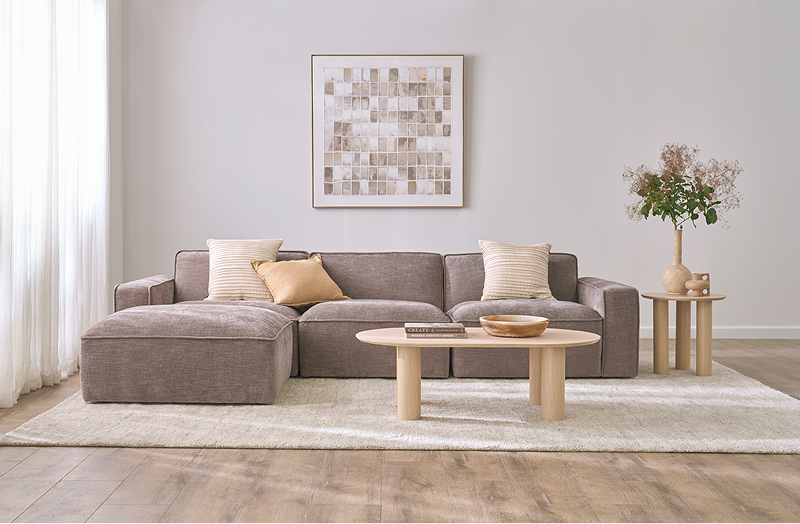
If you've ever rolled out a rug only to think, "This doesn't look right", it usually comes down to living room rug placement. A rug does more than soften the floor under your feet — it anchors your furniture, defines your seating zone and can completely change how large (or small) your living room feels. Getting it wrong can leave your whole room feeling slightly "off".
In this practical guide, we'll walk you through how to lay a rug in a living room properly, which layouts work best and how to choose the right size rug for your space.
Key Takeaways
- Rugs should connect furniture, not float alone.
- The front legs of sofas should usually sit on the rug.
- Larger rugs make rooms appear bigger.
- Rug placement defines seating zones in open-plan homes.
- Always measure before purchasing.
Why rug placement matters in living rooms
Getting your living room rug placement right isn't just about how it looks — though that is important. Here are some ways that placing a rug in a living room can also affect how your entire space functions.
1. Rugs define the seating zone
In open-plan homes, especially, a rug visually groups your sofa, coffee table and armchairs into one cohesive lounge area. Without it, furniture can feel scattered and less intentional.
2. Rugs can make a room look larger
One of the biggest styling secrets? A properly sized rug actually makes a room feel bigger. A rug that's too small can visually shrink the space.
3. Rugs can create balance
A well-placed rug anchors heavier pieces like your sofa and coffee table, stopping them from looking like they're "floating."
If you're browsing for the right floor piece, explore our full range of rugs to see what works for your home layout.
The three most common rug placement layouts
- All legs on rug
- Front legs on rug
- Floating layout Alt: "Living room rug placement layout examples."]
While rug placement might seem confusing at first, there are actually three simple ways to arrange a rug in your living room, depending on the type of space you're working with.
1. All furniture legs on the rug
Best for: Large, open-plan living rooms
In this layout, every piece of seating — sofa and chairs — sits fully on the rug. This creates a luxurious, hotel-style look and works best in living rooms with generous floor space. It helps unify the entire room and is ideal for open-plan layouts.
2. Front legs on the rug
Best for: Most Australian living rooms
This is the most popular living room rug placement option. The front legs of your sofa and armchairs sit on the rug, while the back legs remain off. This connects your furniture visually without needing an oversized rug.
3. Coffee table only (floating rug)
Best for: Small rooms or apartments
Here, the rug sits under the coffee table only, not touching the sofa. While this can work in compact spaces, it's the easiest layout to get wrong. If the rug looks awkward in the middle of the room, it's too small.
How to choose the right rug size for your living room
Choosing the right rug size can feel surprisingly tricky. Too small, and it looks like it's floating awkwardly. Too large, and it can overwhelm the space or push too close to the walls. Here's how to get the proportions right.
1. Measure your seating area
Measure the width of your sofa and the distance between seating pieces. Your rug should extend beyond the sides of your sofa, ideally by 15–25cm on each side.
2. Leave perimeter floor space
In most rooms, leaving 20–30cm of visible flooring between the rug edge and the wall creates breathing room.
3. General rug size guide
- Small living room: 160 x 230cm (minimum for front legs on rug layout)
- Medium living room: 200 x 290cm
- Large open-plan space: 250 x 350cm or larger
When in doubt, go up a size. It's the easiest way to improve living room carpet placement instantly. For more inspiration, check out our guide on how to style a living room.
Should a rug go under the couch?
Short answer: usually, yes.
Placing a rug under the couch (at least the front legs) visually connects your seating arrangement. It makes the sofa feel grounded and integrated into the space. However, in very small apartments where space is tight, a floating layout may be necessary — just ensure the rug is proportionate to your coffee table and seating.
If you're upgrading your lounge at the same time, take a look at our guide to choosing the perfect sofa.
Rug placement tips for small living rooms
Small living rooms can be the hardest to style. Every piece has to work a little harder, and there's not much room for error. The good news? With a few simple placement tricks, you can make a compact lounge feel more open without moving a single wall.
Go larger than you think
It sounds counterintuitive, but a slightly larger rug will almost always make a small living room feel bigger. A rug that extends under at least the front legs of your sofa creates a continuous visual line across the floor. This connects your furniture and stops the room from feeling broken up into smaller sections. Even an extra 20–30cm in width can make a noticeable difference.
Avoid "postage stamp" rugs
One of the most common small-space mistakes is choosing a rug that's too small. This creates what designers sometimes call the "postage stamp" look: a tiny rug stranded in the middle of the room. Instead, aim for a rug that ties at least part of your seating together. Even in compact apartments, the front-legs-on layout usually works better than a fully floating rug.
Use rugs to expand the space
In smaller living rooms, your rug can actually help create the illusion of more floor space. Lighter tones reflect more light and make the room feel airier. Low-contrast patterns can also add interest without overwhelming the space.
Placement matters too. Position your rug so it runs parallel with the longest wall or aligns neatly with your sofa. Straight, balanced lines make the room feel orderly and open. If your lounge flows into a dining area or hallway, a well-sized rug can also clearly define the living zone, which is especially helpful in open-plan apartments.
If you're working with limited square metres, our guide on small living room layout ideas pairs perfectly with smart rug placement.
Keep walkways clear
In a small living room, circulation space is just as important as seating. Make sure there's enough room to comfortably walk around the rug and furniture without stepping halfway on and off the edge. Ideally, leave clear pathways of around 60cm where possible. This keeps the space feeling functional and prevents the rug from becoming a visual obstacle.
Styling tips: matching rugs with furniture
Once you've nailed your living room rug placement, it's time to think about how your rug works with your furniture.
Balance colour
Start by looking at your largest piece, which is usually the sofa. If you have a bold or darker sofa, a lighter or neutral rug can soften the overall look and stop the room from feeling heavy. If your furniture is fairly neutral, a textured or subtly patterned rug can add depth without overwhelming the space.
You don't need everything to match perfectly. Instead, aim for tones that complement each other. Then tie it all together with cushions, throws and décor for a cohesive finish.
Think about texture
Layering texture makes your living room feel inviting. Here are some common types of textured rugs.
- Jute or woven rugs add warmth and a relaxed, natural feel.
- Plush or shag styles bring softness and comfort — ideal for cosy family rooms.
- Low-pile rugs are practical for high-traffic areas and easier to clean.
Positioning coffee tables
Your coffee table should sit comfortably within the boundaries of the rug, not right on the edge, not crowding the sofa. Ideally, you want enough space around it for movement while keeping it centred within your seating zone. For more guidance, see our guide to choosing the right coffee table.
Common rug placement mistakes to avoid
Even great rugs can look wrong if placed incorrectly. Here are some common mistakes to avoid in your own home.
Choosing a rug that's too small
This is by far the number one mistake in living room rug layout. A rug that only fits under the coffee table, without connecting to the sofa or chairs, can make your furniture feel haphazard. A larger rug that tucks under at least the front legs of your seating will instantly create a more cohesive layout.
Not aligning with the sofa
Your rug should feel centred with your main seating piece. If it's shifted too far to one side or sitting at an awkward angle, the entire room can feel slightly off-balance. Step back and view the room from the doorway. Does the rug line up neatly with the sofa and coffee table? Small adjustments of just a few centimetres can make a big difference.
Pushing the rug too close to the walls
A rug that stretches wall-to-wall can sometimes make a room feel boxed in, especially in smaller spaces. In most living rooms, leaving a visible border of flooring (around 20–30cm where possible) creates breathing room and helps frame the rug properly.
Blocking walkways
Comfort matters just as much as appearance. If the edge of your rug cuts across a natural walkway, such as between the sofa and TV unit, it can disrupt the flow of the room. Ideally, you want clear pathways around your seating area so people aren't constantly stepping halfway on and off the rug.
Ignoring proportions
Your rug, sofa and coffee table should feel proportionate to each other. A very large coffee table on a small rug can overwhelm the layout, while a tiny table on a huge rug can feel lost. If you're updating multiple pieces at once, planning your furniture and rug placement together will give you a much more balanced result.
Create a living space you love
The right living room rug placement can transform your space instantly. It connects furniture, improves balance and can even make your lounge feel larger. Whether you're styling your first apartment or refreshing your family living room, explore the latest rugs, sofas and living room furniture to create a space that feels considered, cohesive and completely you.
FAQs
Should the rug go under the sofa?
In most living rooms, yes. At least the front legs of the sofa should sit on the rug to anchor the layout and create visual cohesion.
How far should a rug extend past a couch?
Ideally, a rug should extend 15–25cm beyond each side of the couch. This prevents the layout from looking cramped.
What size rug works best for living rooms?
For most standard lounges, a 200 x 290cm rug works well with a three-seater sofa and coffee table. Larger open-plan spaces may require 250 x 350cm or more.
Can a rug make a room look bigger?
Yes. A larger rug that connects furniture pieces can make the entire room feel more expansive and balanced.